Execution and key achievements
- The project succeeded thanks to innovative approaches throughout.
- It was completed safely, with no harm to anyone and no environmental incidents, on schedule and within budget.
- After 10 years of work, it became the first nuclear site in Britain to be fully decommissioned.
The history of the CONSORT reactor
The CONSORT reactor began operation in 1965 as one of several research mini-reactors built for universities. By the mid-1990s, it was the last one still in service.
In 2011, due to rising costs and a lack of research, educational, training, or commercial use, the college started a decommissioning project. The reactor was shut down in 2012, and the fuel was safely removed and transported to Sellafield in July 2014.
In June 2015, KDC Veolia personnel joined an integrated team with Imperial to decommission and demolish the reactor centre, finishing in 2017.
Project highlights
Nuclear reactor decommissioning
Working with Imperial in Ascot, London
Total project costing £2 million

Executed over 2 years
Decommissioning of the reactor core
Reactor internals
The reactor internals included a core support structure (CSS) and a fuel pocket frame beneath a cover plate and movable shield blocks. The CSS was held in place inside the reactor vessel by four cam-operated retaining plates 3.5 metres below the waterline. To safely remove these highly radioactive components, the team designed innovative extended-reach tools and manipulators, guided remotely by submersible cameras.
A remote handling cell was built using the reactor’s own concrete shielding blocks, creating a secure enclosure monitored by five cameras. This eliminated the need for windows and contained radiation effectively. Two master slave manipulators (MSMs) with specially adapted tooling enabled remote dismantling of the CSS.
Material removal
Highly activated stainless steel components were carefully separated and removed as intermediate-level waste. Remaining CSS sections were size-reduced using unbolting, dismantling, and hydraulic cropping shears before being transferred to storage.
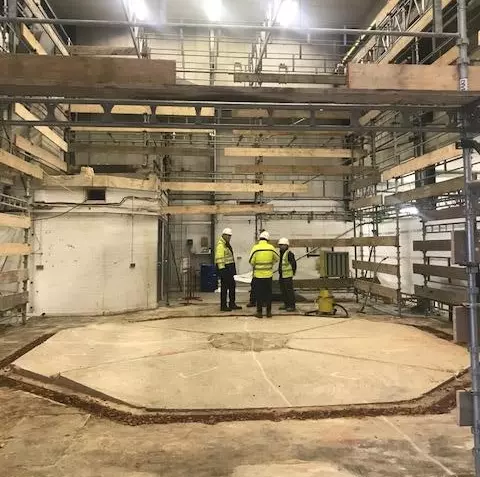
After removing all radioactive material, a ventilated enclosure was built around the reactor bio-shield. Diamond wire sawing cut the bio-shield into 115 blocks weighing approximately 2.5 tonnes each. Fifty tonnes of graphite blocks were hand-removed, with each block monitored and assessed individually.
Following decommissioning, the manipulators were decontaminated and sold to NRS Harwell, delivering cost savings to the client. All work was supervised by Imperial’s management, including Trevor Chambers, former head of the reactor centre, who played a key role in developing the decommissioning plan.
CONSORT reactor asbestos removal
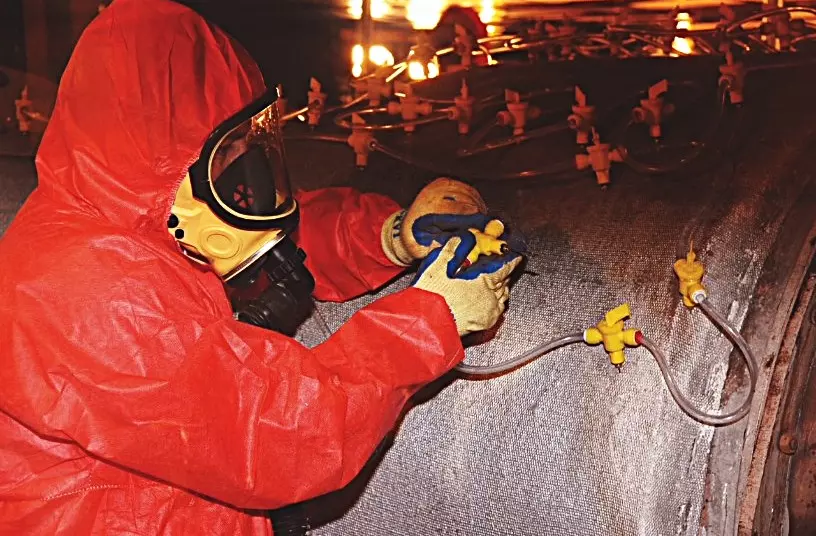
Before arriving on site, KDC Veolia reviewed several asbestos surveys. As some areas were not covered, a P402-trained asbestos surveyor revisited these locations before demolition or asbestos work began.
We carried out all asbestos removal, including insulation board and fibrous asbestos-containing materials. Clear transit routes were established for staff transporting waste, some working 30 metres above ground. CAT B trained operatives handled notifiable non-licensed work such as removing floor tiles, cement sheeting, asbestos gaskets, ACM fire doors, and textured coatings. All asbestos waste was double-bagged, stored in dedicated, clearly labelled, sealed, and locked containers.
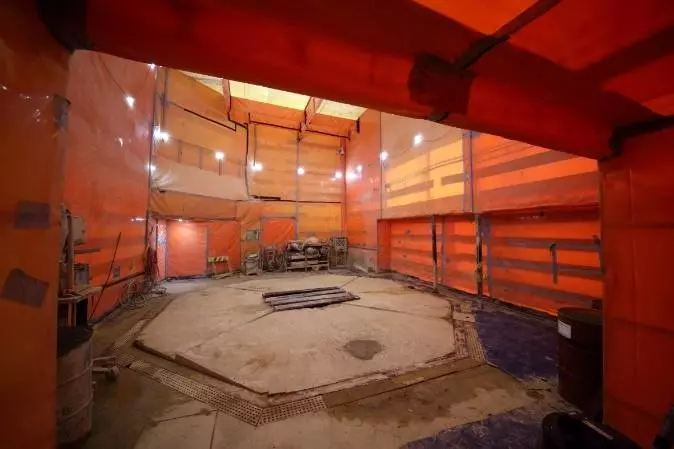
Demolition of the reactor building
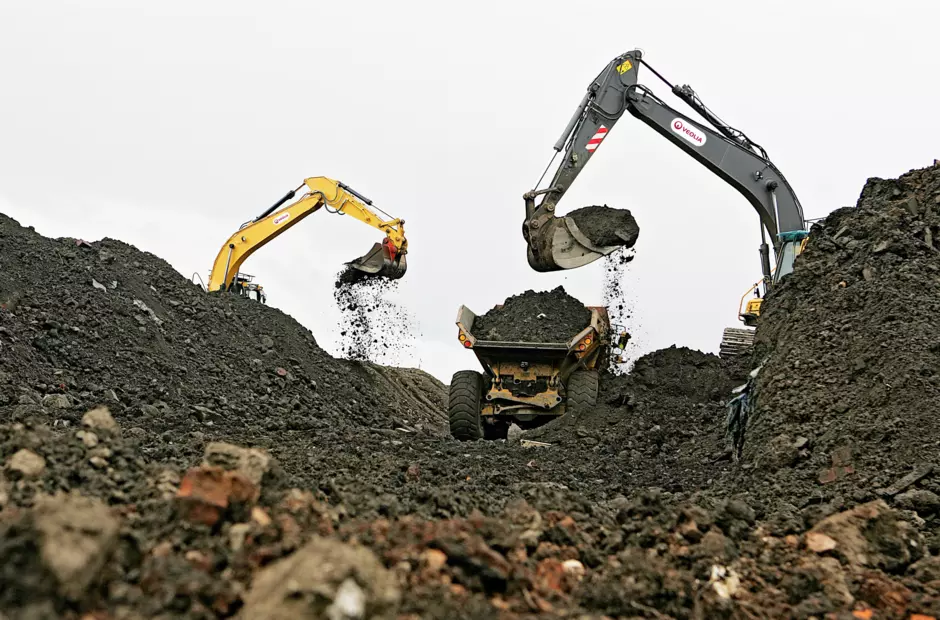
The building was demolished from the top down using a PC490 and CAT 322 excavators; one for demolition and one for waste handling and stockpiling. Block and brickwork were pushed through, and the remaining framework removed in sequence. Waste was stockpiled and loaded into wagons and skips throughout the process.
After demolition, below-ground tanks were removed and demolished, the ground remediated, and remaining holes backfilled with type 1 primary aggregate.
Hear from our client
“KDC Veolia Ltd provided Imperial with an extremely competent team of managers and operators who worked tirelessly in conjunction with Imperial as a Client, to complete a challenging project, both safely and effectively”
Trevor Chambers, Former Head of Reactor Centre, Imperial
Are you looking for expert contractors for your next decommissioning and demolition project?
Find out more by getting in touch with our specialised team.