2025 Policy Highlights
At the dawn of 2025, we highlighted some developments in markets and legislation to keep on your watchlist, and as we close out the year, we’re taking a look back on what’s been achieved and what’s changed.
Water
On 21 July 2025, the Independent Water Commission (the Cunliffe Review) published its final report, presenting its findings and a total of 88 recommendations into how the water sector should be reformed to deliver the supply of safe drinking water and the treatment of wastewater.
Shortly after publication, the Department for Environment, Food & Rural Affairs (DEFRA) confirmed the government would immediately accept 5 key recommendations:
- Establishing a new water ombudsman to resolve customer complaints more effectively.
- Ending self-monitoring by water companies, moving to fully open and independent monitoring to boost transparency and public trust.
- Including a stronger regional element in a new regulator to increase local involvement in water planning.
- Recognising the risks investors take and ensuring they receive a fair, stable return if they meet their obligations.
- Merging Ofwat, the Drinking Water Inspectorate, and water-related functions of the Environment Agency and Natural England into a single regulator in England (with economic regulation in Wales merging into Natural Resources Wales) to better align oversight, while acknowledging that further work is needed to fully integrate water as a system and align with remaining EA functions such as agriculture and waste.
More detailed work continues in Government to assess what and how these recommendations can be implemented at pace, many of which Veolia has been supporting both the Government and its customers on with our expertise and real-world experience of clean water supply and wastewater treatment.
The Water (Special Measures) Bill, launched in 2024 is now an Act, after reaching royal assent earlier this year. This new legislation means the regulator now has a wide range of new powers over water companies.
For example, stronger requirements are now in place for Pollution Incident Reduction Plans to be produced. While other measures empower a newly reformed water regulator to ultimately prohibit performance-related pay for senior executives if the company fails to meet specified performance standards.
As a key partner to the water sector, Veolia provides essential services including treatment, network maintenance, and other Operation & Maintain (O&M) services, which is why we have welcomed many of the changes.
As winter approached this year, multiple flood alerts were issued across the nation and yet, the Environment Agency issued a stark warning towards the end of summer of the likelihood of ongoing drought. It was in part due to the record low levels of rainfall throughout the year that compacted the land, limiting its capacity to absorb the incoming rain, increasing the risk of localised flooding.
We know that seven UK regions will experience water stress as early as 2030 and England could face a shortfall of around five billion litres of water per day by 2050–55.
For the first time in 30 years, a new reservoir is under construction, part of a partnership between Portsmouth Water and Southern Water at Havant Thicket, serving the South East region, one of the seven that will experience water stress by 2030.
The UK government has also committed to fast-track the delivery of another nine new reservoirs to support population growth and the building of new homes, which alongside Havant Thicket Reservoir, brings the total to 10.
New water sources are vital in keeping up with growing demand, but these new reservoirs can’t do it alone. More efficient water management plans are essential. At Veolia, we’re helping our customers move towards circular water cycle management plans, an approach that keeps water in use for longer and transforms wastewater from a liability into an asset. Get in touch today for a free water audit to better understand your business’s water needs.

Energy
The Climate Change Act (2008) requires regular milestones, known as Carbon Budgets, to set the limits for greenhouse gas emissions over 5 years. The Climate Change Committee (CCC) publishes independent advice on these budget levels, which the Government tends to accept although they can choose not to adopt the recommendations. This year saw the seventh budget report recommending that the carbon limit for the period 2038-2042 should be 535MtCO2e (million tonnes of carbon dioxide equivalent).
In comparison, the last two limits were:
- Carbon Budget 6 (2033-2037) - 965MtCO2e,
- Carbon Budget 5 (2028-2032) - 1,765MtCO2e.
The UK overachieved in previous budgets, including the most recently completed Carbon Budget 3 (2018 to 2022), achieving 2,153MtCO2e reduction against a limit of 2,544MtCO2e. Although Carbon Budget 4 is still in period (2023-2027), the CCC forecasts a 50% chance of achieving the target limit of 1,950MtCO2e.
At Veolia we recognise that there is clearly plenty of work still to be done for the UK to reduce emissions while also growing the economy and we’re working across the public and private sector to decarbonise essential operations, such as within the NHS where we currently partner with 42 Trusts across England and have delivered £250 million in major carbon reduction projects.
For nearly two decades, the UK has suffered from a multitude of poor economic foundations; low real wage growth, flat productivity, poorly designed regulatory frameworks, and a lack of ‘dynamism’ where businesses have limited engagement in risk taking.
Geopolitical events are also increasing supply chain instability, increasing the exposure that businesses have to external events. This has increased the cost of doing business. The UK is also lagging behind its peers in multiple areas, such as the development of AI infrastructure. This is further exacerbating disparities in growth across regions of the UK.
To tackle this, the UK Government plans to target 8 strategic sectors for growth and investment as part of the Modern Industrial Strategy and energy plays a significant role in this. More specifically, how can bills be brought down in line with the Government's commitment for Clean Power 2030?
Through the rest of this year, we’ve started to see the publication of most of the sector plans. Much of the direction set is welcome, establishing where challenges exist and how to combat them. Our attention is now turning to how we can utilise our expertise to support the implementation of these sector plans for our customers.
The number of heat networks in the UK is expanding rapidly as part of the Government's decarbonisation plans. With over 14,000 networks in place, ranging from small schemes to city-wide networks, new regulations were introduced this year to ensure that heat network customers have the same rights and protections as other energy users.
Ofgem, the regulator for heat networks, has begun to refine this incoming regulatory framework that is about to cover the market.
In the UK, Veolia currently operates over 120 community heating schemes that distribute low carbon or renewable heat from combined heat and power plants, waste wood biomass and Energy Recovery Facilities and throughout the year, we’ve been preparing to align our portfolio with the proposed regulations. At the same time, we’ve been working closely with both Ofgem and the Department for Energy Security and Net Zero (DESNZ) to help present avenues to unlock new opportunities for the sector.
Significant reform is happening in the electricity market, but not quite in the way that was anticipated.
Although much later than expected, the Government finally confirmed this year that it would no longer proceed with developing a locational pricing model for the market. Referred to as “zonal pricing”, the plan was first proposed by the Conservatives in an attempt to overhaul where demand is supported, and how that generation is utilised; in order to reduce grid costs and encourage the use of renewables.
Attention is now turned to reforming subsidy mechanisms, updating transmission charges and getting both demand and supply grid connections, actually connected.
Waste
A long awaited (interim) consultation response from the Government was published in June this year to set out a handful of the decisions made so far.
It was confirmed that a voluntary Monitoring, Reporting and Verification (MRV) period will run from the beginning of 2026, applying to combustion and process emissions from Energy from Waste (EfW) and waste incineration processes. The intent of the MRV period is to gather data and refine the policy before legislation is formally in place to include the waste sector in the ETS. However, after a long campaign, high temperature incineration for hazardous waste will be exempt.
We expect the full inclusion of waste into the ETS to start in 2028. Though clearly for many Local Authorities and commercial businesses, this is an additional tax which already strained budgets will be unable to manage.
The inclusion of waste in the scheme creates a complicated picture for many. At Veolia, we have been updating our facilities to prepare systems for the MRV period to gather more data that will inform our customers how the Government's ETS will impact them. In the meantime, here’s how we can help you:
- We can provide guidance on MRV compliance and emissions tracking.
- Check out our decarbonisation solutions to help you reduce your carbon footprint.
- We have a diverse range of circular waste solutions to enhance sustainability and resilience in line with wider environmental regulations.
- Head to our Policy Hub for help navigating the evolving regulatory landscape and achieving your sustainability goals.
Since the 31st March 2025, all businesses and other non-household premises in England with 10 or more full-time employees, must separate dry mixed recyclables (DMR) and food waste from general waste as part of the Simpler Recycling regime.
Uncertainty surrounding the regulations remained right up until the deadline and the compressed rollout timeline proved to be a significant challenge, leaving businesses and waste management operators with limited time to confirm customers’ needs, order the necessary containers and scale up resources for deliveries and collections.
As of March 2026, the same rules will apply to households and we can learn a lot from the rollout to businesses. Communications and engagement will play a key role and if you need support, please do get in touch.
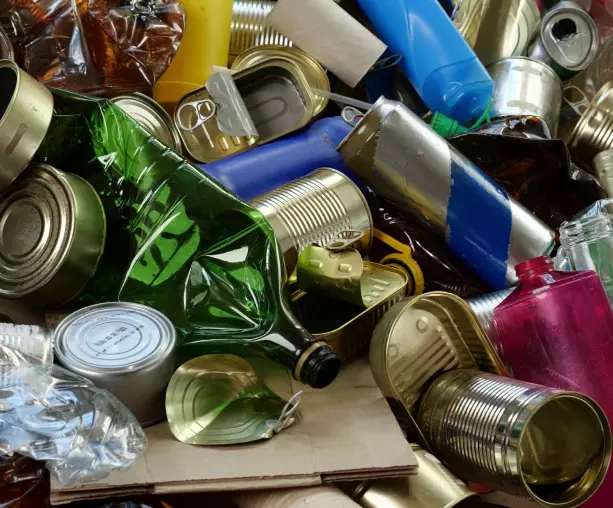
In 2024, the Government confirmed its commitment to delivering a Deposit Return Scheme (DRS) and this was formally approved on 21st January 2025 to include drinks containers made of polyethylene terephthalate (PET), steel, and aluminium cans. This legislation covers England and Northern Ireland only and is set to go live in October 2027.
Although glass containers remain part of the Wales DRS, they will be aligning their timeline of introducing the DRS to match that of England and Northern Ireland.
Scotland has dealt with significant controversy surrounding their initial early attempt to introduce DRS, resulting in legal challenges after the rollout was postponed. Although this legislative power is devolved, Scotland is likely to introduce their DRS in late 2027, aligning with the rest of the UK.
The UK Deposit Management Organisation (UK DMO) was also appointed this year, made up of representatives of companies who make the drinks products that are sold in plastic bottles and cans, and the retailers who sell them and may in future act as return points, where consumers will be able to take their containers and get their deposits back. The UK DMO is committed to delivering interoperable and simple schemes across the devolved nations.
It’s essential that the waste management sector is consulted from the start and at Veolia, we have extensive experience in DRS from around the world. Engaging with our expertise will help to ensure the plans that are put in place are complementary to the existing waste management infrastructure.
Earlier this year, we shared our ultimate guide to packaging Extended Producer Responsibility and hosted a LinkedIn Live with Margaret Bates, Head of the UK pEPR Scheme Administrator at the Department of Environment, Food and Rural Affairs (DEFRA) at the time.
Since then DEFRA has provided an early indication of the fees producers can expect to face in 2026. The provisional figures represent significant increases on the 2025 base fees, rising above current inflation levels, which stand at 3.8%.
Two of our very own experts were appointed to two of PACK UK’s advisory groups this year and will therefore play a vital role in shaping the UK’s packaging waste reforms through invaluable insights and expertise to guide PackUK’s work. Louis Driver, Recycling Consultant for CIRCPACK® sits on the Recyclability Assessment Methodology Technical Advisory Committee (RAM TAC) and Rachel Jay, Head of Education, Communications & Outreach (ECO) joins the Communications and Behaviour Change Advisory Group (CBCAG).
When it comes to the recycled plastics market in the UK, one thing is clear: investment and jobs are at risk.
The continued demise in the market for good-quality recycled content is driven by political inaction and despite having ambitious national targets, the UK is falling short due to a lack of supporting policy frameworks. It is disappointing that the Government once again neglected to make any meaningful increase to the Plastic Packaging Tax (PPT) in the 2025 Autumn Budget, something the industry has made the repeated case for. By not beginning to scale the PPT to £500p/t with a 50% mandatory recycled content threshold, the Government is seriously risking the investment needed for crucial domestic recycling infrastructure, providing green growth and green jobs.
Consequently, we have seen others within this industry setting out their intentions to close their recycling facilities, having a catastrophic impact on the environment, the local economy, and local workforces.
At Veolia, we’re committed to accelerating the circular economy for plastics in the UK and boosting domestic recycling capacity and earlier this year, we invested £70 million into building the UK’s first dedicated tray-to-tray closed-loop PET recycling facility.
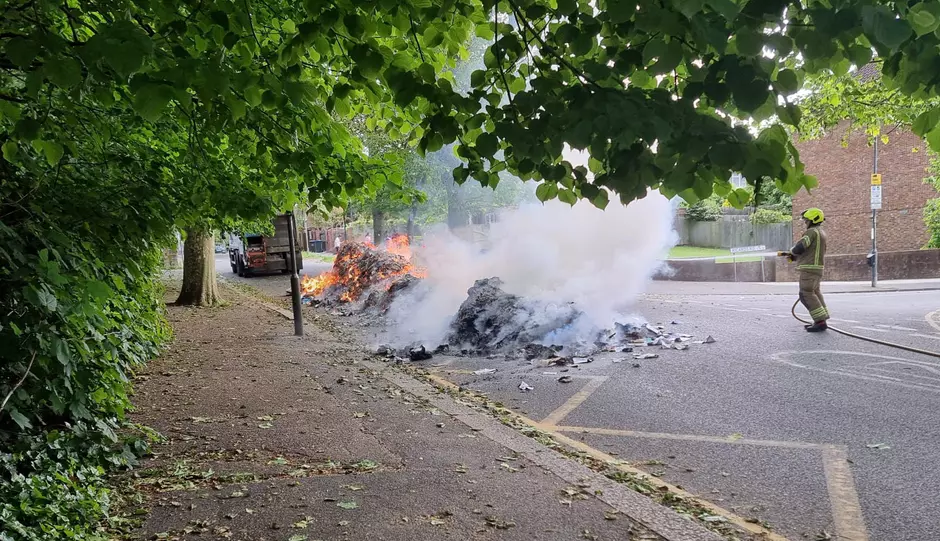
Shocking cases of waste crime continue to be far too prevalent, such as the recent illegal mass dumpings of waste in Oxfordshire and Bristol.
In September, Donald MacPhail, Chief Operating Officer - UK Treatment, presented to a Parliamentary Committee to explain the scale of the challenge, with waste criminals threatening the stability of the waste management sector as waste crime is estimated to cost England’s economy around £1 billion a year.
The Committee is assessing the efficacy of current regulatory, monitoring and enforcement regimes and considering the government’s plans to address the problem with more updates to come.
Over recent decades, the Landfill Tax has been an essential mechanism to divert waste to more sustainable routes and increase recycling and reuse with Local Authority waste to landfill falling by 90% since 2000!
The Treasury launched a consultation in April 2025 and invited fresh evidence on the economic consequences of the proposed landfill tax reforms, specifically, the potential to transition to a single rate of landfill and to remove existing exemptions.
After strong campaigning, the recent Autumn Budget thankfully confirmed that the two rates of landfill tax will not converge and important reliefs such as for water discounting will stay in place.
What's Next?
Rather than regarding all of the above as individual efforts with unique goals, we need to start looking at them as interconnected opportunities and challenges that can be tackled through a symphony of water, waste and energy solutions. At Veolia, that’s precisely what we’re aiming to do through our purpose of ecological transformation.
We’re in direct contact with policy makers to lobby for change and throughout the year, we’ve hosted live events with the likes of Joanna Carew, Head of Simpler Recycling and Margaret Bates, Head of the UK pEPR Scheme Administrator at Department for Environment, Food and Rural Affairs (DEFRA) providing you with the chance to ask your questions directly to those with the answers. Follow us on LinkedIn to stay ahead again next year.
It’s safe to say that 2026 will be another year of significant, but vital change, to start turning the tide in our climate crisis. We realise this can be tricky to navigate, so we’re here to help you deliver resource management solutions across water, waste and energy that balance sustainability and affordability, to help your business thrive in this evolving and often complex landscape.