A joint venture between Veolia and UK Power Network Services
A rising main secured to the Inglis Pyramid Bridge, a unique artefact of Britain’s military history, was in vital need of repair. Due to the bridge’s Grade II listing and location over the Basingstoke Canal, a Site of Special Scientific Interest, Veolia delivered an innovative solution to protect both heritage and nature in Hampshire.
Delivering environmental stewardship in Hampshire
The Basingstoke Canal was designated a Site of Special Scientific Interest (SSSI) in 1995 due to the diversity of aquatic plants and invertebrates that have made this part of Hampshire their home. As the canal descends from a spring rich in calcium and mixes with slightly acidic waters along its journey to meet the River Wey, it produces the perfect environment for a diverse range of flora, which in turn supports a variety of unique invertebrates.
So unique in fact, that Natural England has declared it “the most species-rich aquatic system [in] England.” Protecting this natural habitat was therefore paramount when a project to replace a rising main traversing the canal began.
Working together to protect both nature and heritage
As part of a joint venture between Veolia and UK Power Network Services, MUJV has been providing industry leading utilities and sustainability infrastructure to the Ministry of Defence (MoD) via Aspire Defence Services Ltd (ADSL) and the Defence Infrastructure Organisation (DIO), as part of the Project Allenby Connaught (PAC) scheme since 2006, with the intention to redevelop the military garrisons within Salisbury Plain and Aldershot.
In addition to the water and wastewater network and long term asset management plan, the MoD approached Veolia to develop an innovative solution for redirecting a rising main - a pipeline used to transport water or other liquids under pressure from a lower to a higher level - that had routed sewage from the MoD’s Malta Barracks for many decades.
Originally crossing over the Canal by means of the Inglis Pyramid Bridge, a Grade II listed military heritage artefact from the First World War, so named after its creator, the engineer Charles Inglis (pronounced Ingalls), this 4 inch cast iron rising main was at the end of its lifespan. Careful consideration was given to replacing the existing assets like-for-like but given the environmental risk of spills into the canal, it was decided that new sewage pipework had to be diverted away from the bridge.
Veolia issued a detailed design proposal for directional drilling, which would reroute the rising main beneath the Basingstoke Canal, to all relevant stakeholders. Before this could be progressed onto the construction phase, various agreements had to be reached with several key stakeholders.
Stakeholder engagement
As the owners of Basingstoke Canal, close collaboration with Hampshire County Council (HCC) was vital in moving the project forward. Given the scientific importance of the area, numerous licences and approvals were required:
1. HCC stressed the importance of an easement agreement and we supported the MoD and subsequently the Defence Infrastructure Organisation (DIO), during this process.
2. An assent was necessary for the planned activities on the Canal and Veolia supported HCC in this process. The assent was granted by Natural England in May 2024.
3. A supplementary temporary works design was produced to control water in the woodland, should the Basingstoke Canal breach during the drilling works to adequately protect the area.
4. A subsequent construction compound licence needed to be agreed between all parties.
5. Licence agreements were established with HCC for both drilling under the Basingstoke Canal, and use of their land for site compound.
6. In addition, road closures were agreed but due to Aldershot being an area of continuous development, we were given guidance that all works had to be completed before the Easter weekend in April 2025.
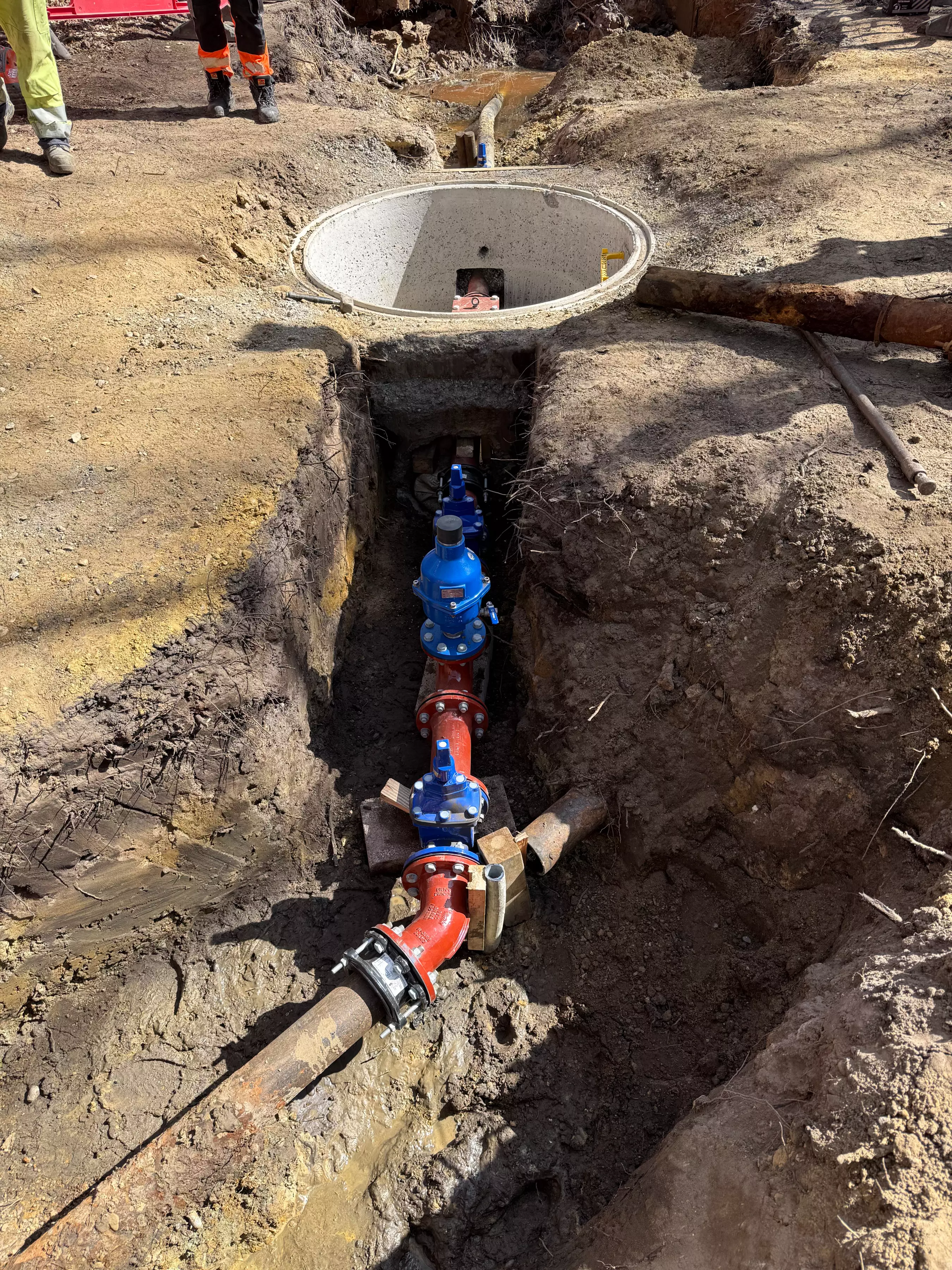
With all of the above signed and approved, work began on the 5th March 2025, to drill 6 metres below the canal bed with the additional temporary works measure. Using bentonite clay, a natural clay acclaimed for its ability to set swiftly, Veolia carried out a single drill shot and by the 31st, the new rising main had been connected.
Today, the Inglis Pyramid Bridge stands as a rare testimony to the ingenuity of our military history and the rising main runs out of sight beneath the canal, protecting our unique natural heritage here in the UK. Our ongoing Operations and Maintenance contract with the MoD also ensures that the pipework poses no threat to the environment.
“At Veolia, we’re committed to supporting the Ministry of Defence's Climate Change and Sustainability Strategic Approach and our comprehensive range of services across water, waste and energy means that we have the solutions to help secure a climate resilient defence sector.
“Only by making improvements and upgrades to existing MoD infrastructure will we be able to achieve this resilience for the challenges of tomorrow and we’re proud to have delivered this innovative project that not only preserves our heritage but protects the UK’s irreplaceable natural environments.”
John Abraham, Chief Operating Officer - Veolia UK & Ireland - Industrial, Water & Energy
“This project is a testament to what can be achieved when people come together with a shared goal. Through careful planning and coordination, we supported a solution that respects both the local community and the natural landscape. We're proud to have played a part in enabling a solution that preserved not only the heritage of the site, but provided a long term solution for a vital piece of infrastructure.”
Richard Tindal, ADSL Capital Projects Director
“The project to reroute the rising main beneath the canal was highly complex. Its successful delivery is an excellent example of collaboration between all parties, enabled in particular by the development and implementation of an innovative solution.”
James Richardson, PAC Team Leader at Defence Infrastructure Organisation (DIO)
Have a complex problem that could use some innovation?
Contact our team of experts to find the right solution for you: